A wisdom tooth or third molar is one of the three molars in human teeth which usually start to come through at the back of our gums at each corner of jaw in late teens and early twenties.
By this time, the other 28 adult teeth are usually in place, so there isn’t always enough room in the mouth for the wisdom teeth to grow properly so they may become impacted and require removal.

A wisdom tooth or third molar is one of the three molars in human teeth which usually start to come through at the back of our gums at each corner of jaw in late teens and early twenties. By this time, the other 28 adult teeth are usually in place, so there isn’t always enough room in the mouth for the wisdom teeth to grow properly so they may become impacted and require removal.

An impacted wisdom tooth happens when there isn’t enough space for it to break through the gum properly. It can become twisted, tilted, or trapped in the jaw.
There are three types of impaction:
Impacted wisdom teeth can trap food and bacteria. This build-up leads to serious dental problems, including:
Gum disease: Plaque toxins cause red, swollen, painful gums. Surrounding teeth and bone may also suffer.
Tooth decay: Plaque breaks down tooth enamel, causing cavities that can spread to other teeth.
Dental abscess: Bacterial infections lead to painful pockets of pus in your gums or wisdom teeth.
Pericoronitis: Infection in the soft tissue around the tooth, often triggered by trapped plaque.
Cellulitis: A bacterial infection spreading to the cheek, tongue, or throat.
Cysts and benign growths: Impacted teeth can cause fluid-filled swellings or cysts if left untreated.
Make an appointment with your dentist If you experience any of the following symptoms
Make an appointment with your dentist If you experience any of the following symptoms.
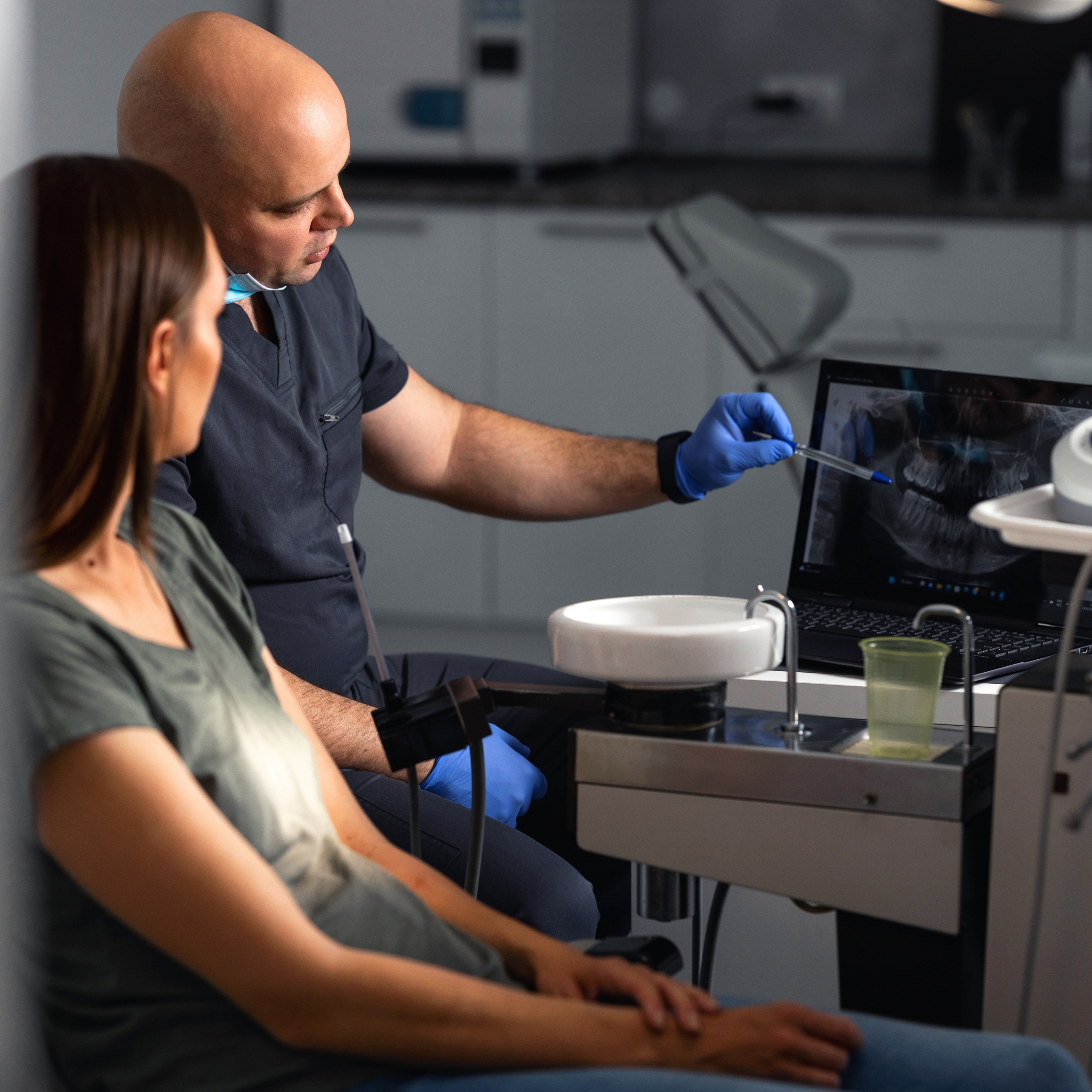
First of all, your dentist will assess your wisdom tooth and carry out an X-ray of your mouth. This gives a clearer view of the position of your teeth in order to determine if it needs to be removed.
We may request a OPG scan, at an additional cost. This is to be completed prior to the extraction appointment to assess the full position of the tooth and its proximity to the ID nerve. This is to ensure we reduce the risk of nerve injury.
The extraction procedure will then depend on the type of impaction you have. You might need to be referred to a specialist dental surgeon at the hospital.
If the extraction is to be carried out at Abbey Mead you will be given local anaesthetic injections to numb the area so that you will only experience pressure during its removal.
Some procedures only take a few minutes, whereas others can take 20 minutes or longer depending on the complexity.
“I've been a coming here for many years, but recently their approach with my 7 year old autistic foster child has been exceptional. After an appointment where he had two small fillings he said...”
“I recently had a new registration appointment for an hour with Dr Richard Aldridge With my somewhat complex dental history I found him to be outstanding in his attentiveness, understanding and professionalism. He coped...”
“rapid response to an acute dental problem - saw me less than 2 hours after I phoned, and very thorough assessment and treatment.”
“My husband and I visited to see Nicole, one of the hygienists. She was and is very professional and explained everything. Highly recommended.”
“Great service from Dr Richard Aldridge and the staff . Treated with empathy. From Glenn Williams - saw Richard a few days ago, great treatment, everything explained in detail. Also,the front desk staff give...”
“Very friendly, professional and informative staff, who provide possible treatment and cost options where necessary. Cannot fault them in any way.”
“I haven’t been dentist for over 15 years but when I broke a tooth I had no choice. Really friendly service, made me feel relaxed and comfortable. Surprisingly teeth are good just need broken...”
Error: No feed with the ID 2 found.
Please go to the Instagram Feed settings page to create a feed.